Too Far Gone? The Ovens Everyone Had Written Off
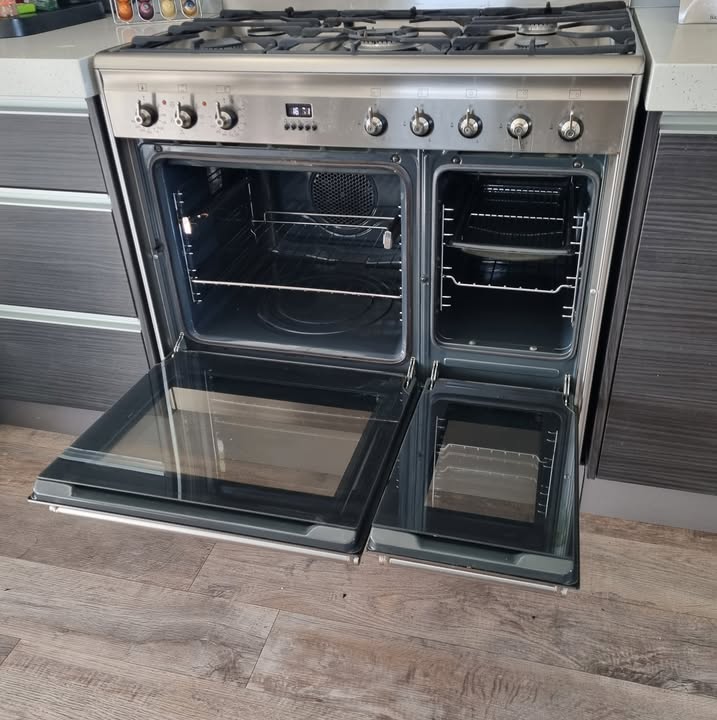
Black racks, carbonised cavities, glass you couldn't see through - real ovens from my Canterbury rounds that came back from the dead.
- before and after
- deep clean
- oven restoration
Too Far Gone? The Ovens Everyone Had Written Off
Every so often someone opens their oven for me with an apology ready, then watches my face for horror. I’ve learned to disappoint them. After the better part of a decade doing this around Selwyn and Christchurch, what shocks me isn’t a neglected oven — it’s the quiet assumption that neglect is permanent. It almost never is.
This post is for anyone standing in front of an appliance they’ve quietly labelled beyond saving. Let me show you what that label usually deserves instead.
The one they thought was scrap
Among my favourite jobs is an oven whose owner had genuinely begun browsing replacements — cavity blackened layer over layer, racks more carbon than metal, a smell that arrived before the kitchen light did. The kind of oven where visitors politely say nothing and hosts stop baking altogether out of embarrassment.
It came back. Properly back — racks soaked and hand-treated until metal showed again, the cavity worked section by section as the layers let go, the whole thing finished, rinsed and tested. That’s not a boast about miracle products; there are none. It’s process: the full sequence applied patiently to layers that took years to form and need more than a Saturday afternoon to leave. The photos on my Facebook page tell it better than adjectives — before-and-afters from real local kitchens, no stock imagery.
Doubles, wall ovens, and the Bosch
Big appliances carry big expectations. A double wall oven I cleaned — a Bosch, all stainless confidence behind glass — looked the part from outside while hiding years of grey film between its door panes. Doors like these come apart when you know how, and that mid-pane haze is precisely what makes an otherwise tidy kitchen read as tired.
Both cavities done, panels separated and cleaned, door rehung and tested. The owners’ reaction was worth the whole day. It’s why doubles and wall ovens feature so heavily in my work — see double, wall & range oven cleaning.
Three signs yours is dirt, not damage
Before you decide your oven’s a write-off, run this quick triage:
- Colour vs texture. Brown-black and glossy-smooth is carbonised grease — dirt. Rough, pitted or flaking metal suggests genuine enamel damage.
- The torch test on glass. Haze that shifts appearance as your viewing angle changes is film between panes — cleanable. Permanent white etching stays identical from every angle.
- Smell behaviour. Grime announces itself with smoke and odour at cooking heat; damage usually doesn’t smell at all.
Dirt answers to process. Damage needs parts. Most despairing owners who run this test discover they own the first kind of problem.
What actually comes back — and what doesn’t
Here’s where honesty earns trust, because results have limits:
Comes back: grease films, carbon layers on racks, trays, walls and floors; baked-on spillage; smoke-producing residue; the amber glaze on reachable glass. Essentially all the grime that made you despair.
May not come back: damage, rather than dirt. Enamel that’s been chipped or corroded stays chipped. Glass etched by ancient caustic spills keeps its cloud. Seals perished by age remain perished. A clean removes what time and cooking deposited — it doesn’t reverse wear. When I inspect your oven I’ll tell you plainly which category each blemish falls into, because you deserve to know before spending anything.
That said — the gap between “looks hopeless” and “genuinely damaged” is much wider than people expect. Most despairing owners own dirt, not damage.
Why people wait (and why waiting costs)
The reasons are human: embarrassment (“she’ll think we’re feral” — I won’t), fear of a lecture (you’ll get tea and honesty, not judgment), or the belief that replacement is cheaper than rescue. On that last point: compare the cost of even the heaviest professional clean against a new wall oven plus installation, and the sums aren’t close. If the appliance underneath is sound, cleaning is nearly always the bargain option — and it comes with the eco-friendly, no-harsh-fumes treatment described in my method post.
The record behind the reassurance
I don’t ask you to take any of this on faith. Every one of the 24 reviewers on Facebook recommends my work — including Robyn P., whose review says it neatly: “What a lovely treat to come home to a sparkling, like new, oven. Great job.” And the gallery shows the journey, unretouched, oven after oven.
Yours might be next
If you’ve been living with a door that “just doesn’t get clean anymore,” consider this your permission slip. Ring or text 021 054 4661, email kimredmond60@gmail.com, or message me via Facebook for a free quote across Darfield, Selwyn and Christchurch. Service details live on my main oven cleaning page — and if yours truly has reached the end, I’ll tell you kindly.