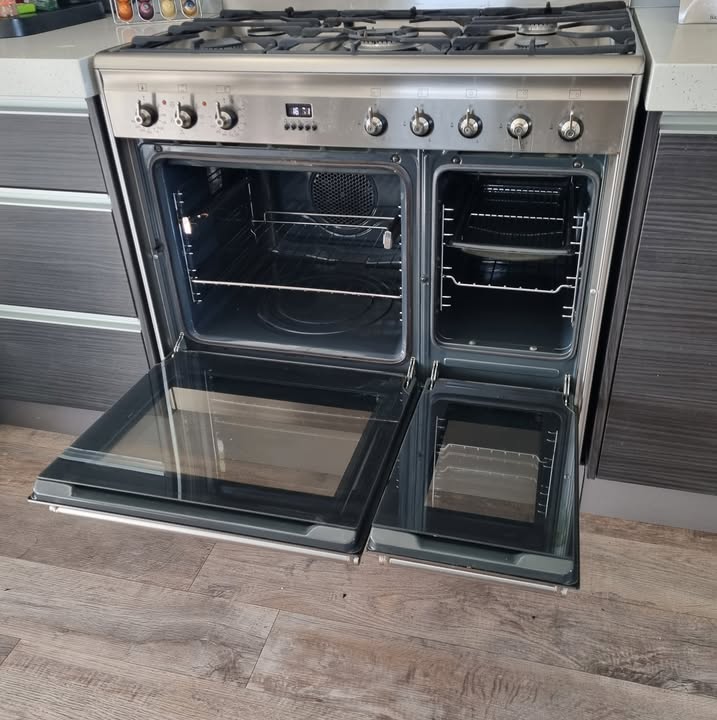
Eco-Friendly Oven Cleaning Around Family Kitchens
No harsh chemical smells, surfaces ready to cook on - why Kim cleans with eco-friendly products, and what that actually means in practice.
- eco-friendly cleaning
- family kitchen
- oven cleaning
Eco-Friendly Oven Cleaning Around Family Kitchens
The kitchen is the one room in the house where “clean” has to mean something more than looks clean. It’s where the kids do homework while dinner bubbles, where the dog naps underfoot hoping for droppings, where food touches every surface. When I chose to build my business on eco-friendly cleaning products, this room was the reason.
What “eco-friendly” means when I say it
You’ll hear “eco” from plenty of cleaning companies — it’s become part of the furniture. So let me tell you what it concretely means in my van:
The products are chosen to be kinder to your home. I use eco-friendly degreasers rather than the harshest chemical options on the shelf. The point isn’t marketing; the point is what your kitchen smells like at dinnertime after I’ve left.
There are no harsh chemical fumes hanging around afterwards. Anyone who’s cleaned an oven with aggressive supermarket caustic spray knows the eye-watering, throat-tickling cloud that comes with it — and the lingering pong that makes you reluctant to cook for days. My approach finishes with everything rinsed through, so the next thing your oven contributes to the room is roast vegetables, not vapour.
Surfaces are ready to cook on when I go. Racks rinsed, cavity wiped through, door glass polished dry. Your oven doesn’t need to “air out” before Sunday baking.
The honest question: does gentle actually work?
This is the bit worth being straight about, because you deserve a real answer: eco-friendly products alone don’t shift baked-on carbon. No product does — not the harsh ones either. What shifts baked-on carbon is process: heat, soak time, patience and hand work. The products support the process; they don’t replace it.
That’s why a professional eco clean outperforms a domestic chemical assault more often than not. While supermarket spray sits on the surface fizzing weakly against carbon it can’t penetrate, my racks are soaking warm, my cavity is being treated section by section, and the layers come away progressively instead of partially. Gentle chemistry plus stubborn technique beats harsh chemistry plus a tired scrubber. Ask any of the 24 people who’ve recommended my work on Facebook — the results speak through the photos, not just the philosophy.
Why it matters most for families
I think about three groups in particular:
Households with small children. Little ones live at bench height and floor level, hands on everything, toys dropped near wherever the cleaning happened. Choosing gentler products means the residue story in your kitchen is simple: rinsed surfaces, no chemical smell, nothing you wouldn’t want near the highchair.
Homes with pets. Cats patrol benches; dogs investigate everything new. A kitchen without harsh chemical odours or films is a kinder place for noses far more sensitive than any human’s.
Anyone who cooks soon after. Some cleaners advise staying clear of the oven for ages afterwards because of fumes. With my method, the whole point is that you can be back roasting in time for that night’s dinner. Life doesn’t pause for housework — the oven especially shouldn’t.
Keeping it kind between visits
You don’t need heavy chemicals for everyday upkeep either:
- Wipe spills once the oven cools — fresh mess lifts easily; old mess becomes geology.
- Warm water and dishwashing liquid handle most routine grime on hob tops.
- Bicarbonate paste helps with light staining, though be honest with yourself about its limits — I’ve written about what DIY methods genuinely do.
- Leave the deep layers to someone with a soak tank. That’s not a sales line; it’s just the honest division of labour.
What I hear at kitchen doors
The same worries come up again and again when I quote jobs across Selwyn and Christchurch, so let me answer them here:
“Will the house smell of chemicals for days?” No — that’s the point of my product choices. There’s a faint, clean scent while I work, then nothing lingering. Dinner goes back in the oven without a second thought.
“Do we need to keep the kids out of the kitchen?” Not once I’ve finished and packed up. During the visit, normal house rules apply — curious toddlers and enthusiastic dogs are safer being otherwise occupied, as they would be for any work in the kitchen.
“Is eco actually strong enough for our oven?” Strong enough that every one of the 24 Facebook reviewers recommends the results — including some genuinely frightful cavities. The strength lives in the method, as I explained above; the eco products make that method pleasant to live alongside.
The eco habit between visits
If you’d like your everyday routine to match, a family-kitchen toolkit is refreshingly short:
- Microfibre cloths for glass and stainless — water alone does more than you’d expect.
- Warm water and dishwashing liquid for benchtops, hob tops and the oven’s exterior.
- Bicarbonate of soda for light interior staining, applied cool and rinsed well.
- Ventilation — the cheapest cleaner there is. A window cracked while cooking keeps grease films thinner.
- A calendar note for the deep clean, because no household toolkit replaces soak capacity — that’s the honest limit of DIY.
A cleaner kitchen without the cloud
If the smell of conventional oven cleaner has put you off getting the job done properly, that’s exactly the problem eco-friendly oven cleaning solves. Ring or text 021 054 4661, email kimredmond60@gmail.com, or message me on Facebook for a free quote across Selwyn and Christchurch — full details on my oven cleaning page.