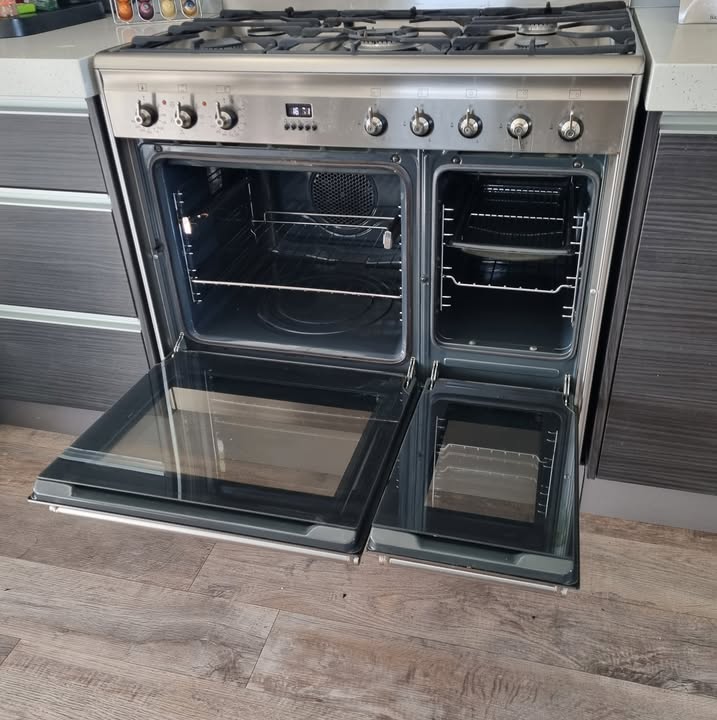
DIY Oven Cleaning Myths, Honestly Scored
Bicarb paste, self-clean cycles, dishwasher tablets - a professional oven cleaner separates what DIY methods actually do from folklore.
- diy cleaning
- baking soda
- oven cleaning tips
DIY Oven Cleaning Myths, Honestly Scored
The internet has opinions about oven cleaning. Bicarbonate of soda features heavily. So do dishwasher tablets, lemons, and a certain optimism about the self-clean button. Some of this folk wisdom is genuinely useful; some of it ends with people ringing me anyway, slightly singed of pride.
I’m not here to talk you out of DIY — regular home upkeep genuinely matters, and plenty of you enjoy it. I’d just rather you held realistic expectations about what each method delivers, because disappointment is the main product sold alongside miracle hacks.
Myth one: “Bicarb paste cleans an oven”
Verdict: partially true — for light grime only.
A bicarbonate-of-soda paste with a little patience genuinely helps with fresh spills and light films. It’s mildly alkaline, kind to surfaces and noses, and as household chemistry goes it’s a decent citizen.
What it doesn’t do is shift baked-on carbon — the black crust that’s fused through repeated heating. That layer needs sustained chemical softening (ideally warm) plus mechanical work; a cool paste sitting on glass for a night barely dents it. If your oven merely needs a freshen-up, bicarb away. If the racks have gone matte-black, no amount of pantry science will save the Saturday.
Myth two: “Just run the self-clean cycle”
Verdict: misunderstood — and worth caution.
Pyrolytic self-clean functions work by running the cavity extremely hot for a long stretch so residue incinerates to ash. It’s a real feature on real appliances, but the internet undersells the fine print:
- Racks should come out first (most manufacturers say so) — left in, they can discolour and their coatings suffer.
- The door glass gets nothing extra, especially not between panes where most visible film lives.
- It smokes and smells while running — sometimes dramatically if layers are heavy — which is rough timing if guests arrive expecting roast chicken.
- Extreme prolonged heat stresses an aging appliance. On older ovens especially, treating every deep clean as a furnace event is a gamble with elements and electronics.
Self-clean has its place on modern machines with owners who understand it. As a substitute for actual cleaning of a neglected oven? That’s how many of my jobs start.
Myth three: “Supermarket oven spray plus elbow grease equals professional”
Verdict: the elbow grease is doing more than you think — and less than needed.
Caustic oven sprays are legitimately aggressive chemistry, used carefully they achieve real results on medium grime. The catch is coverage: spray can’t soak racks properly outside the cavity, can’t reach behind glass panels, and goes thin over vertical surfaces where gravity disagrees. What looks like “spray did the job” is often a long session of scraping wearing a spray-can costume.
There’s also the experience itself: caustic fumes in an unventilated kitchen, gloves, splatter anxiety, residue needing thorough rinsing before cooking resumes. Compare my version — eco-friendly products, components soaking warm, no harsh smells, kitchen cook-ready afterwards — and the difference isn’t just the result; it’s the day.
Myth four: “Dishwasher tablets polish door glass beautifully”
Verdict: harmless-ish hack, oversold outcome.
The viral trick — rub a damp tablet across the oven door — does remove some surface film, and the videos are oddly soothing. But tablets are formulated for machine conditions, the technique reaches only reachable glass, and heavy carbon laughs at it. Fine as a between-cleans buff-up. Not a method.
Myth five: “Leave it — the next roast will burn it off”
Verdict: backwards.
Every high-heat run bakes existing residue harder, not away, while releasing smoke and acrid smell into your food. Layers compound; flavours taint; the smoke alarm develops opinions. Carbon doesn’t leave by invitation. There’s a full explainer in my why-is-my-oven-smoking post.
Myth six: “A lemon in a warm oven freshens = cleans”
Verdict: it freshens. It does not clean.
The warm-lemon trick genuinely improves kitchen aroma for an evening — steam loosens the lightest surface film and citrus masks odours nicely. But fragrance is not removal: the carbon layer underneath is untouched, and masking a smoky oven can even delay the proper fix while layers keep building. Enjoy the lemon; just don’t bill it as cleaning.
Where DIY genuinely fits
Here’s my honest division of labour:
- Weekly-to-monthly: wipe spills once cool, buff the door glass, keep loose debris cleared. Cheap, effective, yours.
- Seasonally: bicarb or gentle cleaner on the reachable interior; hob top degreased; rangehood canopy wiped.
- Annually-ish (or when the signs arrive): the deep clean — racks soaked, cavity treated fully, glass done inside and out, seals wiped, everything tested. Industry guidance puts the interval around six-to-twelve months for regular users; more help finding yours in how often to clean your oven.
Do steps one and two yourself with my blessing. When step three arrives, that’s when the specialist kit earns its keep — here’s exactly what it involves.
No shame either way
Half my bookings come from capable people who simply value their weekends; the other half tried the myths first. Both are welcome. Ring or text 021 054 4661, email kimredmond60@gmail.com, or message me on Facebook for a free quote across Darfield, Selwyn and Christchurch — details on my oven cleaning page.