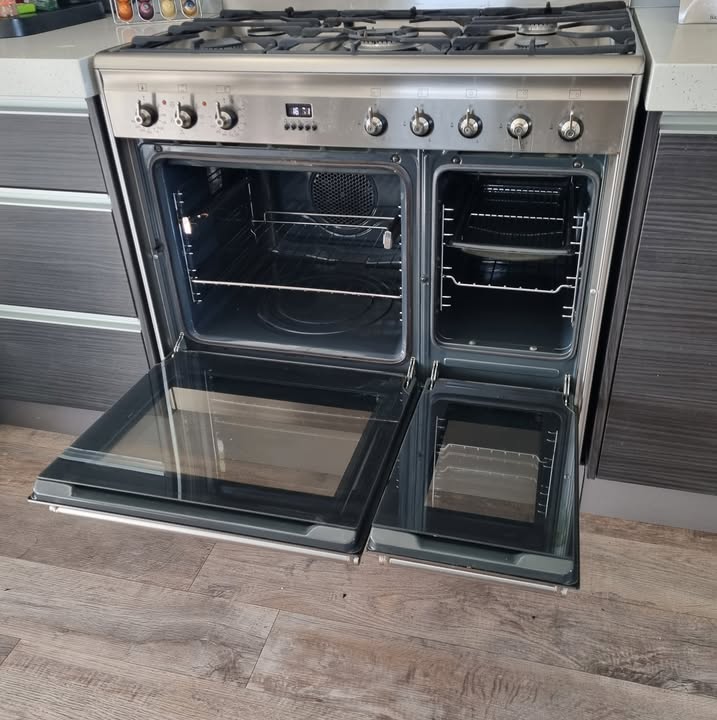
How Often Should You Clean Your Oven?
Industry guidance says more often than any of us do. A working oven cleaner on realistic cleaning intervals - and the signs it's time.
- oven maintenance
- cleaning frequency
- home care
How Often Should You Clean Your Oven?
Ask a room of Kiwis how often their oven gets a proper clean and you’ll get laughter, deflection, and one suspiciously smug person. It’s the household job everyone agrees matters and nobody schedules — which is exactly why, by the time I meet most ovens, they’re years into a career of quietly accumulating carbon.
So: what’s the honest answer? Let me give you both versions — the textbook one and the real-world one.
The textbook answer
Professional cleaning guidance across the industry generally suggests a thorough clean every six-to-twelve months for a regularly used oven, with lighter upkeep in between. Cleaning companies and appliance-care guides repeat that advice consistently; I won’t pretend I can improve on it.
The logic is sound. Grease and spills carbonise each time the oven runs at heat, so layers build with use, not with calendar months. Heavy roasting seasons add layers quickly; a summer of salads adds almost none.
The real-world answer
In practice? Most people go far longer between proper cleans — often years, often only when something forces the issue: a smoke alarm solo during dinner, a smell tainting the roast, a bond inspection looming, or the door glass becoming genuinely hard to see through.
I’m not judging. Ovens hide their state from daily life — you open them briefly, slide trays in, close the door. It takes a special moment (usually while holding a torch at an unflattering angle) to truly survey the situation. That out-of-sight quality is why ovens end up on my books after long stretches, and why I never shame anyone about what greets me. I’ve seen everything. Twice.
Signs it’s actually time
Forget the calendar for a moment; your oven will tell you:
- Smoke at normal cooking temperatures — baked-on grease burning off is the classic cause; there’s a full explainer in my why-is-my-oven-smoking post.
- Acrid or stale smells flavouring your cooking, especially during roasts.
- The door glass has gone amber-to-brown, particularly between the panes.
- Visible crust on racks, floor or around the fan cover.
- It’s simply been a very long time and you know, deep down, who you are.
Any one of these means the six-to-twelve-month conversation has arrived, fashionably late.
What “a proper clean” means here
Worth being precise, because this is where households accidentally cheat themselves: wiping the floor of the cavity while the racks stay in isn’t a clean — it’s tidying. The deep version means racks out to soak, every interior surface treated, door glass done inside and out including panels where accessible, seals wiped, everything rinsed and reassembled. My deep-clean walkthrough shows the full sequence.
Between those thorough cleans, light habits genuinely help: wipe spills once the oven cools, give the door glass a regular buff, don’t let fresh mess graduate into geology.
A rough guide by household
Every kitchen differs, but if you want a starting framework:
- Roast-every-weekend households: aim inside the industry window — a professional clean roughly twice a year keeps pace with layer-building.
- Moderate users: once a year professionally, plus routine wipes, suits most families.
- Light or seasonal users: you may stretch comfortably beyond a year — judge by the signs above rather than guilt.
- Renters: book against your tenancy timeline instead — before inspections or at move-out, per my bond survival guide.
- Sellers: once, well before photos, and forget about it — see the pre-sale post.
A quick self-audit
Still unsure which camp your oven falls into? Grab a torch and check these four spots — it takes a couple of minutes and tells you more than any rule of thumb:
- Under the door seal line — crumbs and grease beads collecting along the seal edges.
- The roof of the cavity — the spot nobody looks at, where films thicken fastest above the heat.
- Rack rungs at the back — run a finger (paper towel over it) along a rear rung; slick or gritty means layers forming.
- The glass at an angle — hold a light low and look through; amber haze between panes is the classic slow build.
Two or more yeses and the six-to-twelve-month conversation has arrived, whatever the calendar says.
The specialist bit, briefly
When the deep clean comes around, the question is whether to DIY or call someone whose whole business is cavities. Both routes are valid; they’re just different experiences. If you choose mine, you also get eco-friendly products — no harsh chemical smells, surfaces rinsed and cook-ready — which makes the whole exercise notably pleasanter. More on why that matters in my eco-friendly cleaning post.
When did you last really look?
Ring or text 021 054 4661, email kimredmond60@gmail.com, or message me on Facebook for a free, no-obligation quote. I cover Darfield, Selwyn and Christchurch — service details on my oven cleaning page. Whatever the interval you land on, put it in the calendar. Ovens count on nobody noticing.